
 Post by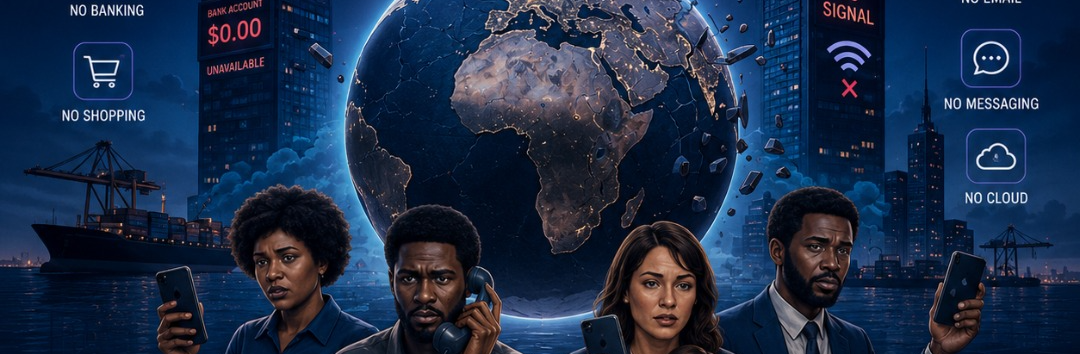
Imagine waking up tomorrow to a world with no internet.
No Google searches, No WhatsApp messages, No online banking, No cloud services, No food delivery apps, No online shopping, No GPS navigation, No video meetings. Within minutes, businesses would struggle to communicate. Financial transactions would slow down. Hospitals, airports, logistics companies, and emergency services would face major challenges. Millions of people would suddenly realize how much of daily life depends on a stable internet connection.The internet has become more than a convenience—it's the invisible infrastructure that powers our economy, education, healthcare, communication, and innovation.
The internet has become an essential part of modern life, connecting billions of people and powering businesses, governments, healthcare, education, and communication. If the internet suddenly stopped working for just 24 hours, the impact would be immediate and far-reaching. Online banking and digital payments would come to a halt, making it difficult for people to complete financial transactions. Businesses that rely on cloud services, emails, and online platforms would face operational disruptions, leading to delays and financial losses. Communication would become one of the biggest challenges. Messaging apps, video conferencing, and social media platforms would be unavailable, forcing people to rely on traditional methods such as phone calls or face-to-face interactions. E-commerce websites, food delivery services, and ride-hailing apps would stop functioning, affecting millions of customers and businesses worldwide. Transportation systems that depend on GPS and real-time traffic updates would also experience significant difficulties.


Critical sectors like healthcare, emergency services, airports, and logistics could face serious challenges if their internet-dependent systems became unavailable. Although many organizations have backup systems, prolonged internet outages would still slow down operations and reduce efficiency. At the same time, the outage could remind us of the importance of offline preparedness and disaster recovery planning.This scenario highlights how deeply integrated the internet is into our daily lives. It is no longer just a tool for communication—it is the foundation of the global digital economy. Businesses must invest in cybersecurity, reliable backup systems, disaster recovery plans, and business continuity strategies to ensure they can continue operating during unexpected disruptions.
The first signs would appear almost immediately. People would repeatedly refresh web pages, restart their Wi-Fi routers, and contact their internet service providers. Offices would struggle to access emails, cloud documents, and business applications. Students attending online classes would suddenly lose access to learning platforms, while remote employees would be unable to join virtual meetings.Social media would fall silent for the first time in decades, leaving millions wondering what was happening. The absence of instant communication would create uncertainty, rumors, and widespread confusion.
Although a worldwide internet outage is highly unlikely, imagining this scenario encourages us to think differently about technology. It reminds us that while digital innovation has transformed our lives, it has also increased our dependence on connected systems.The organizations that succeed in the future will not simply be the most digital—they will be the most prepared. Building secure, resilient, and adaptable systems is no longer optional; it is essential. A 24-hour outage would highlight the importance of preparation rather than panic. Organizations that invest in business continuity planning are far more likely to recover quickly from unexpected disruptions. One of the biggest lessons from such an event would be realizing how much of our daily life depends on systems we rarely think about.
The internet is more than a collection of websites and applications. It is the invisible foundation of our connected world. If it disappeared for just 24 hours, the impact would be felt in every industry, every business, and nearly every household.
The real question isn't "What if the internet stopped?
"It's "Are we prepared if it does?"