
 Post by
In today's fast-paced digital workplace, effective communication is essential for successful collaboration. While traditional communication often requires people to be available at the same time, modern organizations increasingly rely on asynchronous communication—a method that allows individuals to communicate and respond at their own convenience rather than in real time. From emails and project management tools to recorded video messages and shared documents, asynchronous communication has become a cornerstone of remote and hybrid work environments.
Unlike synchronous communication, such as phone calls, video meetings, or face-to-face conversations, asynchronous communication does not require an immediate response. Team members can review messages, complete their current tasks, and reply when they are available. This flexibility improves productivity, reduces interruptions, and enables teams across different time zones to collaborate efficiently without scheduling conflicts.
One of the biggest advantages of asynchronous communication is its ability to promote focused work. Frequent meetings and constant notifications often interrupt concentration, making it difficult to complete complex tasks. By allowing employees to respond when it best fits their schedule, asynchronous communication minimizes distractions and helps maintain productivity. It also provides individuals with more time to think carefully before responding, resulting in clearer and more thoughtful communication.
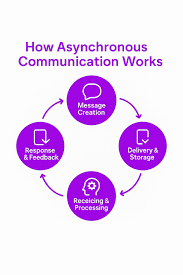
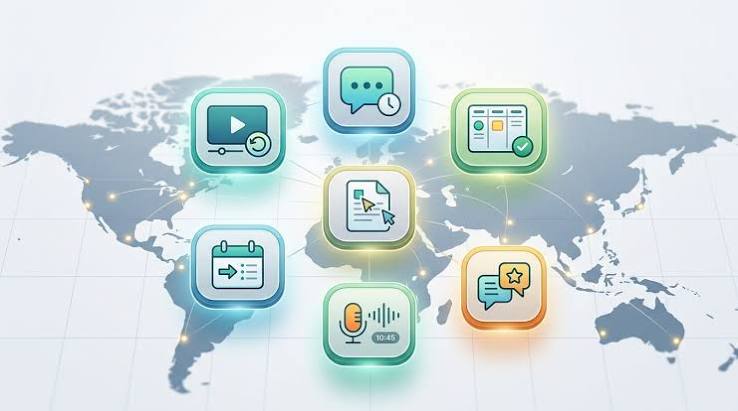
Asynchronous communication has become increasingly important with the rise of remote work. Organizations with employees located across different cities or countries cannot always depend on real-time meetings. Instead, they use collaboration platforms such as project management software, shared documents, email, and messaging applications to exchange information, assign tasks, and monitor progress without requiring everyone to be online simultaneously.
However, asynchronous communication also presents certain challenges. Since responses are not immediate, urgent issues may take longer to resolve. Misunderstandings can also occur if messages lack sufficient detail or context. To overcome these challenges, organizations encourage clear writing, well-structured documentation, defined response expectations, and the appropriate use of synchronous communication whenever immediate collaboration is necessary.
Today, many of the world's leading technology companies—including organizations that support distributed and remote teams—use asynchronous communication as a key part of their workflow. Teams rely on emails, collaborative documents, task management systems, discussion boards, and recorded presentations to share knowledge while reducing unnecessary meetings and improving efficiency.
Did You Know?
Many successful remote-first companies have significantly reduced the number of daily meetings by adopting asynchronous communication practices. Instead of gathering everyone into frequent video calls, employees share updates through written messages, recorded videos, shared documents, and project management tools, allowing teammates to stay informed while maintaining uninterrupted focus on their work.As digital workplaces continue to evolve, asynchronous communication is becoming an essential skill for professionals across every industry. The ability to communicate clearly through written messages, organize information effectively, and collaborate without requiring constant real-time interaction has become increasingly valuable in modern organizations.
Fun Fact: Studies have shown that reducing unnecessary meetings and encouraging asynchronous communication can improve employee productivity, reduce workplace stress, and provide more uninterrupted time for deep, meaningful work.