
 Post by
Cloud computing has become the backbone of modern businesses, enabling organizations to store data, run applications, and deliver services with greater flexibility, scalability, and cost efficiency. From startups to multinational enterprises, companies rely on cloud platforms to support their daily operations. However, as cloud adoption continues to grow, so do the cybersecurity threats targeting cloud infrastructure. Understanding these risks is essential for protecting sensitive information, maintaining business continuity, and ensuring customer trust.
One of the most common threats to cloud infrastructure is data breaches. Misconfigured storage buckets, weak authentication mechanisms, or stolen credentials can expose confidential business information, financial records, and customer data to unauthorized users. Such incidents can lead to financial losses, legal penalties, and significant reputational damage. Organizations should implement strong encryption, access controls, and regular security audits to minimize these risks.
Another major concern is identity and access management (IAM) vulnerabilities. Many cyberattacks occur because users have excessive permissions or use weak passwords. Attackers often exploit compromised accounts to gain unauthorized access to cloud resources. Implementing multi-factor authentication (MFA), enforcing strong password policies, and applying the principle of least privilege are essential practices for protecting cloud environments.
Misconfigured cloud services remain one of the leading causes of cloud security incidents. Incorrect firewall settings, publicly accessible databases, unsecured storage, or improperly configured virtual machines can unintentionally expose critical systems to the internet. Regular configuration reviews, automated security assessments, and continuous monitoring help organizations identify and correct these vulnerabilities before they are exploited. Ransomware attacks continue to evolve and increasingly target cloud-based environments. Cybercriminals encrypt business-critical data and demand payment in exchange for restoring access. If cloud backups are not properly secured, organizations may struggle to recover their data. Maintaining encrypted backups, implementing endpoint protection, and testing disaster recovery plans are vital strategies for defending against ransomware.
Another growing threat is Distributed Denial-of-Service (DDoS) attacks, where attackers overwhelm cloud-hosted applications with massive amounts of traffic, making services unavailable to legitimate users. These attacks can disrupt business operations and negatively impact customer experience. Cloud providers often offer DDoS protection services, traffic filtering, and load balancing to help mitigate these threats.❞

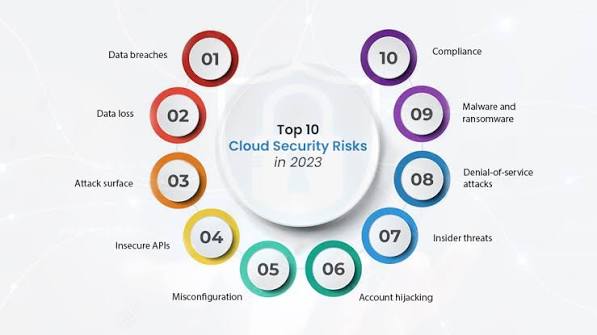
Insider threats also pose significant risks to cloud infrastructure. Employees, contractors, or third-party vendors with authorized access may intentionally or accidentally expose sensitive data. Organizations should monitor user activity, restrict access based on job responsibilities, and conduct regular security awareness training to reduce the likelihood of insider-related incidents.As businesses increasingly adopt multi-cloud and hybrid cloud environments, insecure APIs (Application Programming Interfaces) have become another critical security concern. APIs enable communication between cloud services, applications, and users. Poorly secured APIs can provide attackers with an entry point to steal data, manipulate systems, or compromise cloud resources. Strong authentication, API gateways, encryption, and continuous testing are essential for protecting these interfaces.
Did You Know? Industry reports consistently show that many cloud security incidents are caused by misconfigurations rather than sophisticated hacking techniques. Simple mistakes, such as leaving a storage bucket publicly accessible or granting excessive user permissions, can expose sensitive business data to the internet.
Fun Fact: Modern cloud platforms process billions of security events every day using Artificial Intelligence and machine learning to identify suspicious activities, detect threats in real time, and help organizations respond to cyberattacks before they cause significant damage.