 Post by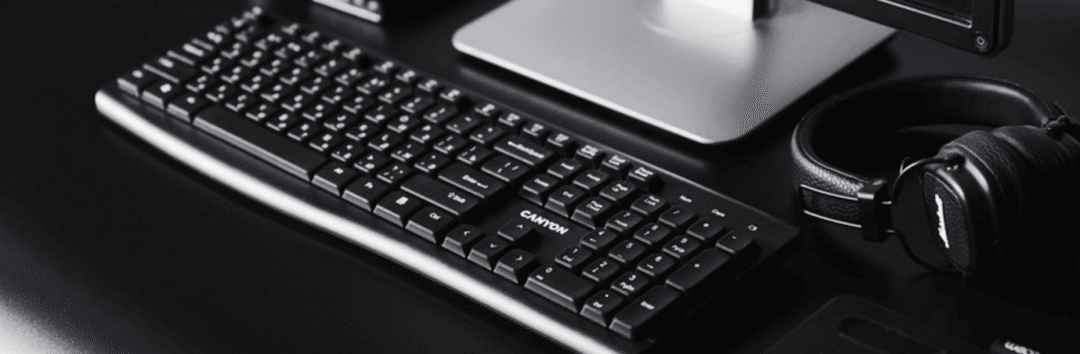
Have you ever looked at your computer keyboard and wondered why the letters aren't arranged in alphabetical order?
If you look at the top-left of your keyboard, you'll see the letters:
Q – W – E – R – T – Y
These six letters give the keyboard its famous name: QWERTY.
Today, QWERTY is one of the most familiar keyboard layouts in the world. We use it every day to write emails, search the internet, create documents, write code, and communicate with others.But why are the letters arranged this way?The answer takes us back to the fascinating history of the mechanical typewriter.
The Story Begins With the Typewriter
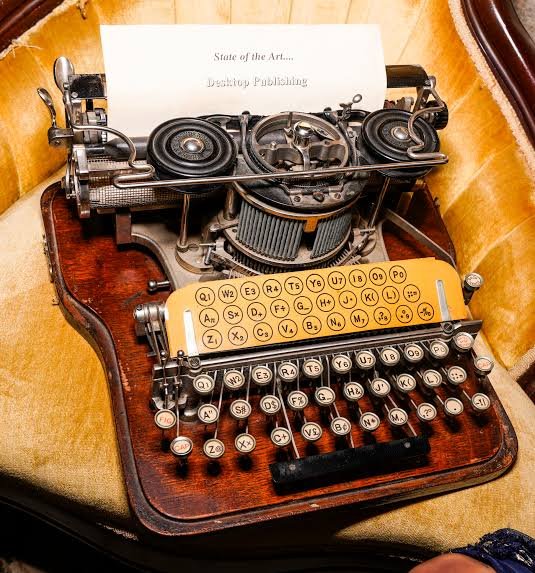
Before computers, smartphones, and tablets, people used mechanical typewriters to write documents. Early typewriters worked very differently from the keyboards we use today. When a person pressed a key, a mechanical arm called a typebar would move upward and strike an inked ribbon, leaving a letter on the paper. It was a clever invention for its time—but it had a problem. If certain letters were positioned too close together and were pressed quickly one after another, the mechanical typebars could interfere with each other and sometimes become jammed or tangled. Imagine trying to type quickly and suddenly having the machine stop working because two metal arms got stuck together! This was one of the challenges faced by early typewriter designers.
Before computers existed, people used mechanical typewriters to write letters, documents, and other important information. These machines worked using mechanical arms called typebars. When a person pressed a key, the corresponding typebar moved and struck an inked ribbon to print a letter onto the paper. However, early typewriters had mechanical limitations. When certain keys were pressed quickly one after another, their typebars could sometimes interfere with each other and become stuck. The development of the QWERTY arrangement was connected to efforts to make mechanical typing more practical and reliable. As typewriters became more popular, people began learning how to type efficiently using the QWERTY layout. Typing schools and professional training programs adopted the arrangement.
When computers became popular, manufacturers could have introduced a completely new keyboard layout. However, by that time, QWERTY was already deeply established. People already knew how to use it, businesses had trained employees to type with it, and educational institutions were teaching it. Changing the entire arrangement would have required people to learn typing all over again. As a result, computer keyboards continued to use the familiar QWERTY layout.
Today, modern keyboards no longer have the same mechanical problems as traditional typewriters, but QWERTY remains one of the most widely used keyboard layouts in the world. It can be found on desktop computers, laptops, smartphones, tablets, and many other digital devices. The technology around us has changed dramatically, but the basic arrangement of the keys has remained surprisingly familiar.
The story of the first keyboard begins long before modern computers and smartphones. One of the earliest widely used keyboard-like devices was the typewriter, which allowed people to write by pressing keys instead of writing everything by hand. Early typewriters used mechanical parts to transfer letters onto paper, making writing much faster and more efficient. As typewriters evolved, the familiar QWERTY keyboard layout became widely adopted. Later, when computers were introduced, manufacturers kept a similar keyboard arrangement because people were already familiar with it and knew how to type using the layout. Over time, the keyboard evolved from a mechanical tool used for typing on paper into the digital keyboards we use today on computers, laptops, tablets, and smartphones. Although modern keyboards are much more advanced, their basic design still carries a connection to the early days of the typewriter, making the keyboard a fascinating example of how old inventions continue to influence modern technology.
The story of QWERTY is a fascinating example of how technology evolves. Sometimes, an invention from the past continues to influence the future simply because people have become familiar with it and built their habits around it. The next time you sit down at your computer and see the letters Q-W-E-R-T-Y, remember that those six letters are connected to a long history of mechanical typewriters, human habits, and technological innovation. What looks like an ordinary keyboard today is actually a small piece of technology history that has survived into the modern digital age.
Funny Things About the First Keyboard
One funny thing about the history of keyboards is that the letters are not arranged alphabetically. If someone designed a keyboard today from scratch, you might expect it to start with A, B, C, D. But instead, we got QWERTY!
Another interesting fact is that the keyboard layout we use today was created during the typewriter era, when people were dealing with mechanical machines. Today, we use powerful computers that can perform millions of calculations in seconds, yet we still type using a layout that has its roots in those old mechanical typewriters. And here's another fun thought: the QWERTY keyboard was designed for machines, but humans ended up memorizing it! Instead of changing the keyboard completely as technology evolved, we adapted ourselves to the layout.
So, the next time you accidentally press the wrong key, remember: you're not just using a keyboard—you're using a design that has survived from the age of mechanical typewriters to the age of artificial intelligence! 😄