
 Post by
Website maintenance support is the structured, ongoing process of keeping a website secure, functional, compliant, fast, and aligned with business goals after it has gone live. It goes far beyond occasional content edits or software updates. At its core, website maintenance support covers technical upkeep, security management, performance optimization, compatibility assurance, and continuous monitoring of all components that make a website usable and trustworthy over time. This includes the website’s codebase, content management system, plugins or extensions, hosting environment, third-party integrations, databases, and user-facing features such as forms and checkout flows.
A critical distinction must be made between one-time fixes and ongoing website maintenance support. One-time fixes are reactive in nature. They address a specific, visible problem such as a broken contact form, a layout issue after a browser update, or a plugin conflict. Once the issue is resolved, the engagement typically ends. Ongoing website maintenance support, by contrast, is proactive and preventive. It assumes that websites are living systems exposed to constant change through browser updates, security threats, evolving search algorithms, and user behavior. Maintenance support therefore includes regular updates, scheduled health checks, performance audits, backups, security scans, uptime monitoring, and documentation of changes.
From a business perspective, website maintenance support functions as risk management and operational continuity. It reduces downtime, prevents security incidents, protects search visibility, and ensures that the website continues to support lead generation, sales, and customer engagement without disruption.
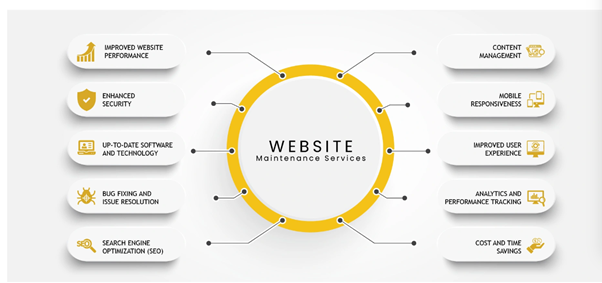
Website maintenance is not optional because the internet environment in which a website operates is never static. Performance degradation is one of the earliest and most common consequences of neglect. As databases grow, unused scripts accumulate, images remain unoptimized, and third-party services change their behavior, page load times increase. Slower websites directly affect user engagement and conversion rates, and they also reduce visibility in search engines that increasingly prioritize real-world performance metrics.
Security vulnerabilities represent an even more serious risk. Outdated content management systems, plugins, or frameworks are among the most common entry points for malware, data breaches, and defacement attacks. A single unpatched vulnerability can expose customer data, payment information, or internal systems. The financial and reputational damage from such incidents often far exceeds the cost of ongoing maintenance support.
SEO decay is another overlooked but measurable outcome of poor maintenance. Broken links, crawl errors, outdated metadata, duplicate pages, and poor mobile performance gradually erode rankings. Search engines such as Google continuously update their algorithms to favor secure, fast, and well-maintained websites. Without regular maintenance, even previously well-ranked websites lose organic traffic over time.
User experience and compliance risks compound the problem. Broken forms, outdated content, inaccessible navigation, and non-compliant cookie or privacy implementations reduce trust and may expose businesses to legal consequences, particularly in regulated industries. In this context, website maintenance is not a technical luxury. It is a foundational requirement for digital credibility and business continuity.
Website maintenance and website development serve different but complementary purposes, and confusing the two often leads to misaligned expectations and budgets. Website development focuses on creating something new. This includes building a website from scratch, adding new features, redesigning interfaces, or implementing major functional changes such as a new booking system or customer portal. Development work is typically project-based, time-bound, and scoped around specific deliverables.
Website maintenance, on the other hand, focuses on preserving and stabilizing what already exists. It involves updating existing systems, fixing bugs, optimizing performance, monitoring security, and ensuring compatibility with evolving technologies. Maintenance does not usually introduce new business logic or major features. Instead, it ensures that existing functionality continues to work as intended under changing conditions.
Understanding this boundary is important for decision-makers. Maintenance keeps the digital asset healthy and operational. Development expands or transforms the asset. Most mature websites require both, but maintenance should be continuous, while development is periodic and strategic.
1. Impact on Website Performance and Speed
2. Security, Data Protection, and Risk Mitigation
3. SEO Stability and Search Visibility
4. User Experience and Conversion Optimization
Website maintenance support is what protects performance, security, search visibility, and user trust over time. When maintenance is proactive and structured, websites remain reliable assets that support growth instead of becoming sources of risk and emergency costs.
If your website drives leads, revenue, or customer confidence, maintenance should be treated as a strategic responsibility, not an afterthought. Review how updates, security, backups, and performance are handled today. If the process feels reactive or fragmented, it is time to move to a managed maintenance model with clear accountability and long-term focus. Businesses that want a disciplined, agency-led approach often work with providers like Nitai to ensure their websites stay secure, stable, and business-ready at every stage of growth.